Seven outcomes. One ongoing journey of learning, reflection and service.
This page reflects on how my academic experiences, internship and community involvement have helped me work toward each of the seven Culinary Arts Program Student Learning Outcomes at Kapiʻolani Community College.
Program learning outcome 01 of 07
Culinary knowledge & professional skills
Integrate the knowledge, skills and attitudes in all areas of basic food preparation, advanced culinary arts, basic baking, nutrition, menu planning, guest services, and operational controls and management required to meet the requirements for a Certified Culinarian by the American Culinary Federation Foundation.
My reflection
My culinary education at Kapiʻolani Community College has helped me connect classroom knowledge with practical kitchen experience. In culinary labs, I have practiced basic and advanced food preparation, baking, portioning, plating and menu development. Planning takeout service required me to consider preparation quantities, menu balance and production timing. My Dining Room Certification helped me appreciate guest services, while my food service management studies and Rooted & Rising Bakehouse business plan have introduced me to operational controls, ingredient costs, labor and sustainability. At Kāle’s Hale, I applied these skills by preparing garde manger items, sauces, soups, laulau and bentos, and eventually opening the restaurant independently. These experiences have helped me progress toward the professional competencies described in this outcome; they do not mean that I have earned the ACF Certified Culinarian credential.
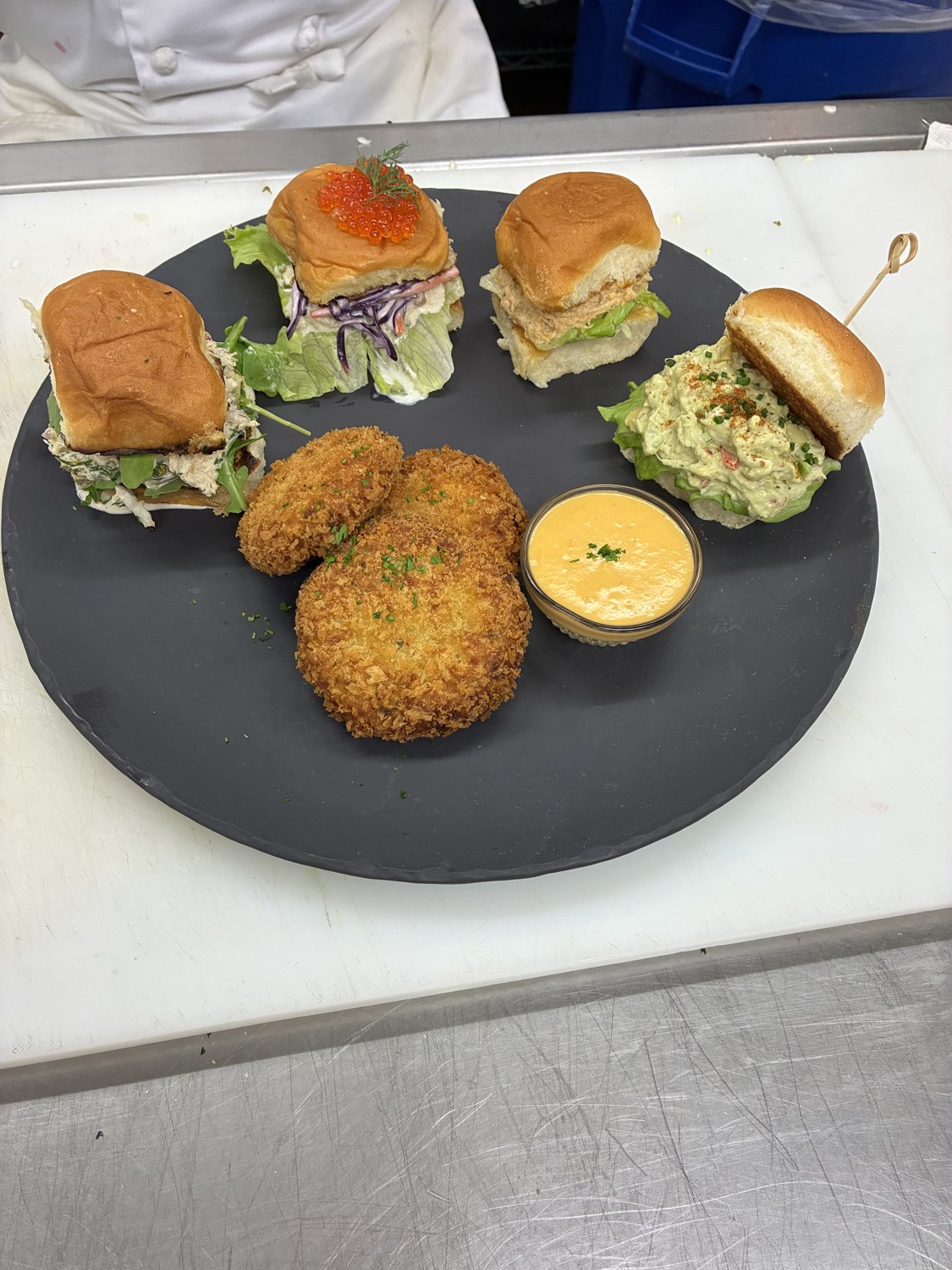
A plated assortment of miniature sandwiches and accompaniments.
Examples & evidence
Culinary Arts Certificate of Competence (2024); Dining Room Certification; internship preparation and opening responsibilities; bakery business plan.
Program learning outcome 02 of 07
Professional work ethic
Incorporate within their work ethic the standards in attendance, behavior, grooming and dress that reflect the mature work attitude expected of industry professionals.
My reflection
Culinary school has taught me that professionalism begins before I enter the kitchen. I strive to arrive prepared, wear the appropriate uniform, maintain personal hygiene, communicate respectfully and take responsibility for my station. At Kāle’s Hale, I made cleanliness a priority by washing dishes, removing trash, labeling and storing ingredients and cleaning throughout my shifts. As I became more dependable, Chef Kale trusted me to open the restaurant and begin bento production independently. That experience reinforced the importance of accountability and maintaining professional standards even when a supervisor is not present.
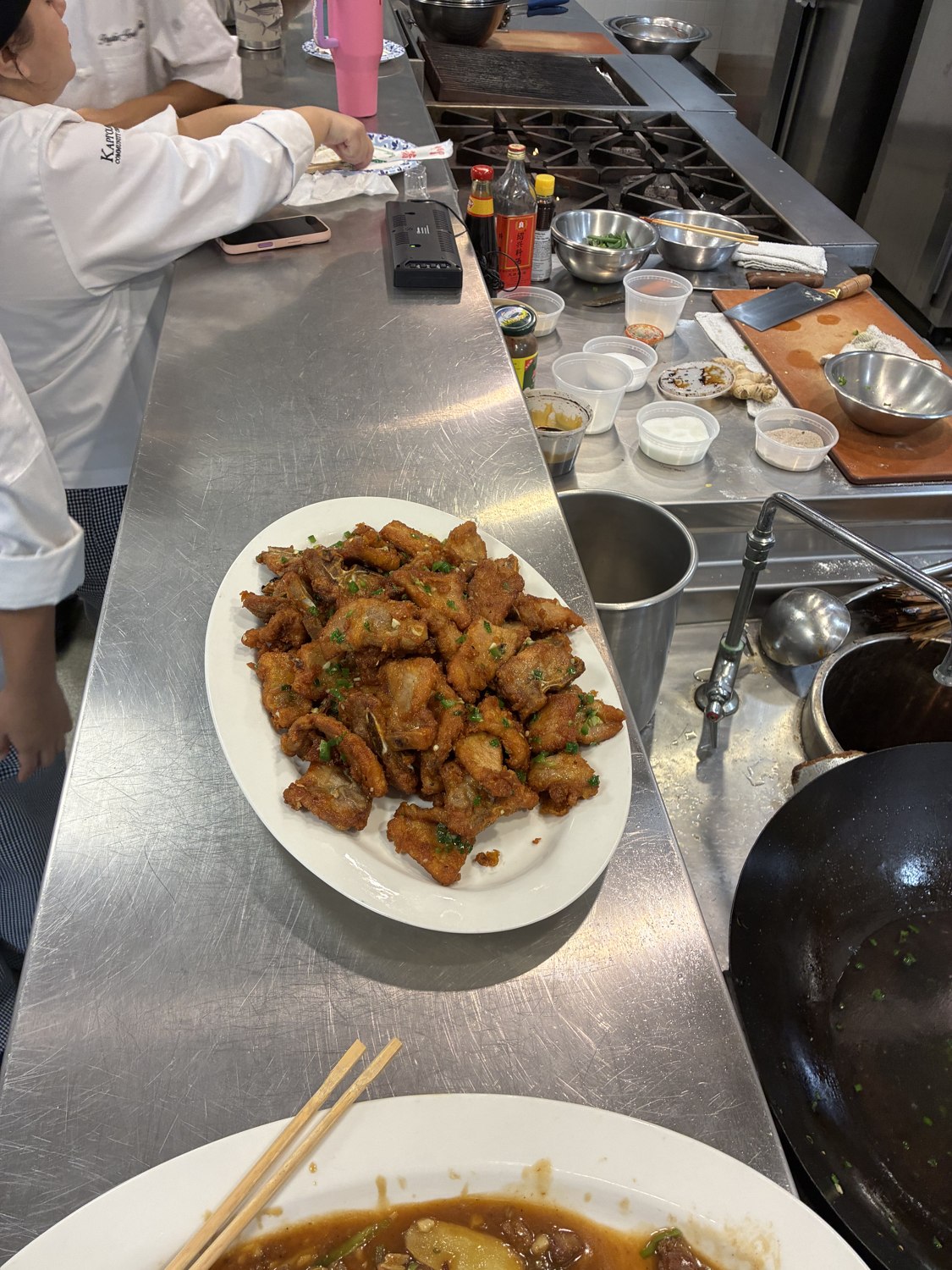
Food preparation in a working kitchen.
Examples & evidence
225-hour internship; opening responsibilities; sanitation and walk-in organization.
Program learning outcome 03 of 07
Critical thinking & decision-making
Make effective decisions with intellectual integrity to solve problems and/or achieve goals utilizing the skills of critical thinking, creative thinking, information literacy, and quantitative/symbolic reasoning.
My reflection
I have learned to approach problems by considering the information available, identifying priorities and evaluating possible solutions. In culinary service, I use quantitative reasoning when planning portions, scaling recipes and determining ingredient quantities. During my internship, I had to organize opening tasks and decide what needed to be completed first to keep bento production on schedule. In developing my nonprofit bakery concept, I have considered ingredient costs, food waste, staffing and the needs of the populations I hope to serve. These experiences have taught me that effective decisions require both creativity and accurate information, and that it is important to recognize what I still need to learn.
Examples & evidence
Takeout menu and prep planning; opening duties at Kāle’s Hale; nonprofit bakery development project.
Program learning outcome 04 of 07
Ethical communication
Ethically compose and convey creative and critical perspectives to an intended audience using visual, oral, written, social, and other forms of communication.
My reflection
My coursework and employment have provided opportunities to communicate with different audiences. Through written internship journals and academic reports, I reflect on my experiences and explain what I have learned. In my KSSLP position, I develop website and social media content, coordinate volunteers and communicate with students and community partners. I also contributed to a counselor workshop about the culinary student experience, where I helped share the realities of culinary education. These experiences have taught me to adapt my message to the audience, represent information accurately and respect the people whose experiences I share. This e-Portfolio is another opportunity to combine visual and written communication ethically.
Examples & evidence
KCC counselor workshop presentation; internship reflections; website and social media responsibilities; this e-Portfolio.
Program learning outcome 05 of 07
Culture, ethics & diversity
Evaluate one's own ethics and traditions in relation to those of other peoples and embrace the diversity of human experience while actively engaging in local, regional, and global communities.
My reflection
As a Native Hawaiian culinary student, I value the cultural traditions that shape my identity while remaining open to the traditions of others. Studying European Mediterranean cuisine and other international cuisines has encouraged me to understand the cultural context behind ingredients and techniques. At Kāle’s Hale, I observed how Hawaiian, Japanese and Chinese influences can coexist in a menu that honors local traditions. Preparing laulau and learning about dishes such as Luau Soup helped me appreciate the relationship between cultural heritage and culinary creativity. My community service work also connects me with people from different backgrounds and reinforces the importance of treating everyone with respect.
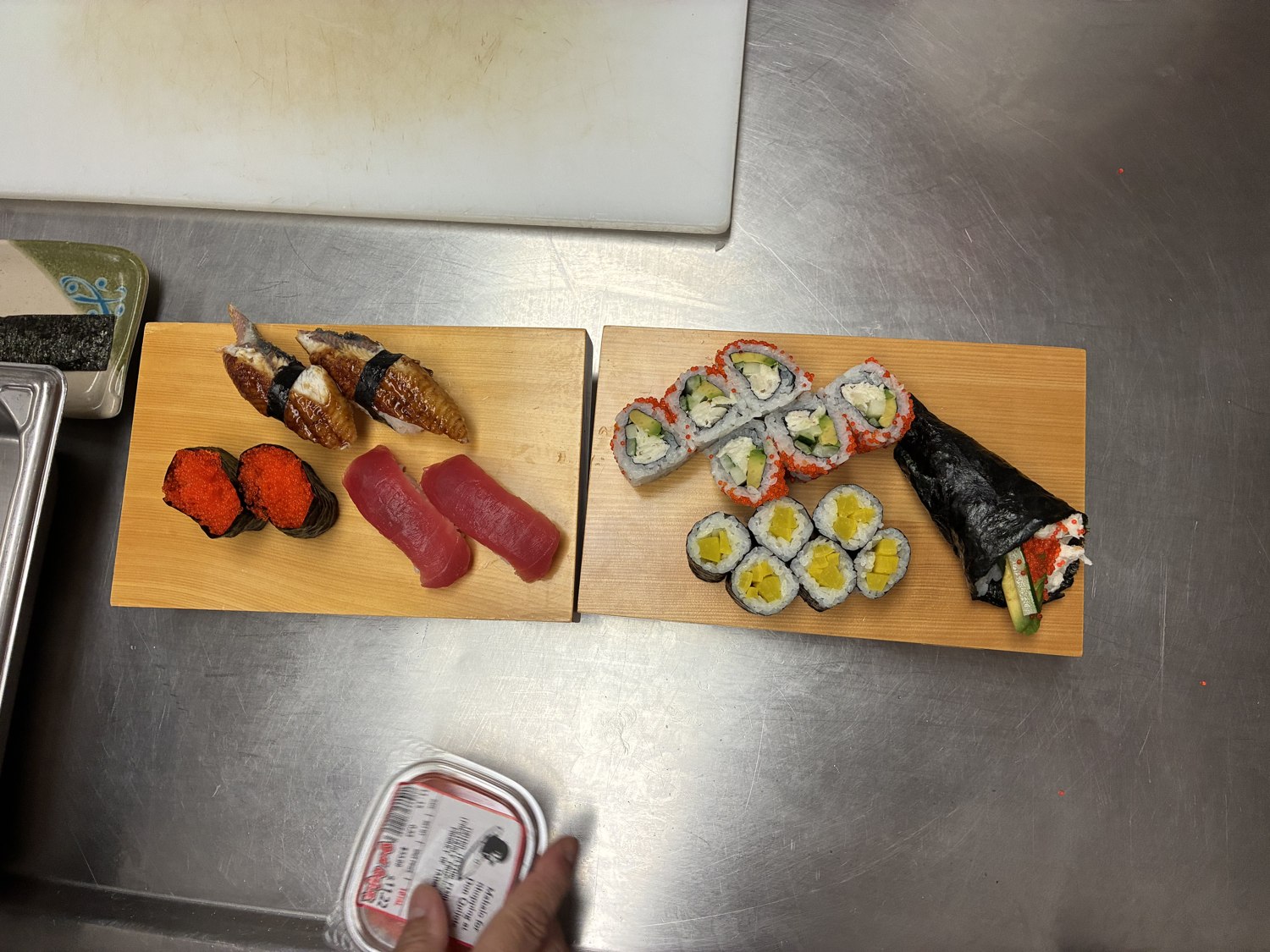
An assortment of sushi and carefully prepared seafood.
Examples & evidence
Hawaiʻi Regional Cuisine report; European Mediterranean cuisine coursework; laulau preparation; community service.
Program learning outcome 06 of 07
Aesthetics & human experience
Through various modes of inquiry, demonstrate how aesthetics engage the human experience, revealing the interconnectedness of knowledge and life.
My reflection
Culinary arts have shown me that aesthetics involve more than making food look attractive. Color, texture, aroma, presentation and cultural meaning all influence how people experience a meal. Through hands-on practice, observation, recipe development and reflection, I have explored how thoughtful presentation can communicate care and creativity. The heart-shaped pastry in my internship gallery is a small example of how food can express personality and emotion. Organizing the gingerbread house event at Alani Children’s Center also demonstrated how culinary activities can create enjoyment, connection and memorable experiences for families. These experiences have helped me understand the connection between artistic expression, technical knowledge and human relationships.
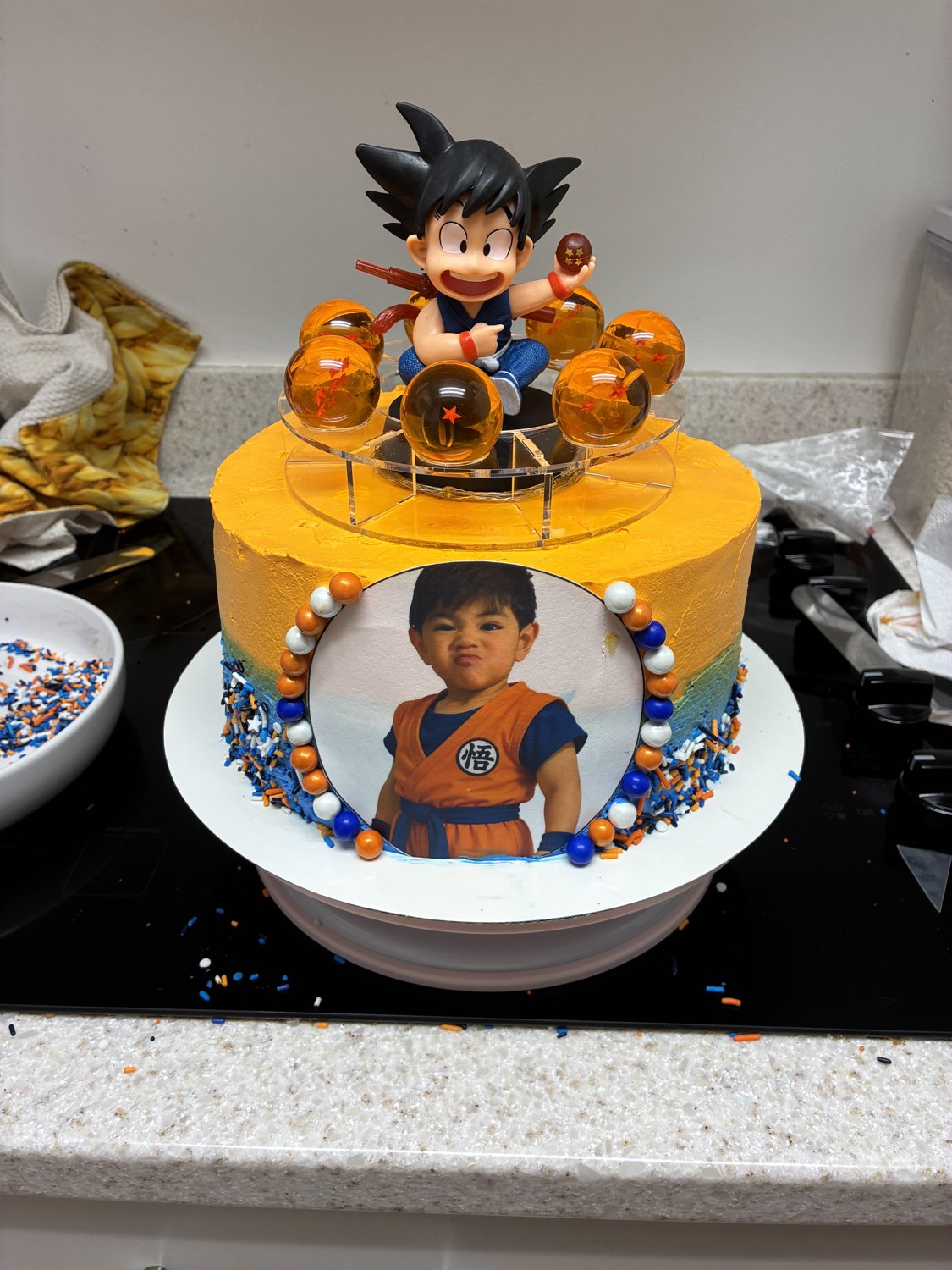
Creative cake decoration and character-inspired design.
Examples & evidence
Heart-shaped pastry photograph; Alani Children’s Center gingerbread event; culinary plating and presentation practice.
Program learning outcome 07 of 07
Interdisciplinary learning & community
Explore and synthesize knowledge, attitudes and skills from a variety of cultural and academic perspectives to enhance our local and global communities.
My reflection
My education extends beyond culinary arts. Earning my Mental Health Technician certificate and working with the Service & Sustainability Learning Program have helped me recognize how communication, empathy, cultural awareness and practical skills can support others. I have applied culinary and organizational skills through the Alani Children’s Center gingerbread house event and the Kona Low Flood Relief Bake Sale. My long-term goal is to combine my culinary education, food service management knowledge and commitment to community by establishing Rooted & Rising Bakehouse, a nonprofit bakery that creates training and employment pathways for justice-involved women and at-risk youth. I hope to contribute to a more inclusive and sustainable food industry in Hawaiʻi while continuing to learn from broader perspectives.
Examples & evidence
Mental Health Technician Certificate of Competence (2025); KSSLP leadership; flood relief bake sale; Rooted & Rising Bakehouse concept.
Official outcome statements reproduced from the Culinary Arts Program Student Learning Outcomes document supplied for HOST 293. My reflections describe my progress and ongoing professional development.